
Best Sale


Breville BOV900BSS Smart Oven Air Fryer Pro and Convection Oven, Brushed Stainless Steel
- Regular price
- $1,199.85
- Sale price
- $1,199.85


LO4011 - Rhodium Brass Ring with No Stone
- Regular price
- $2.31
- Sale price
- $2.31


TK2942 - High polished (no plating) Stainless Steel Ring with No Stone
- Regular price
- $4.62
- Sale price
- $4.62


Sport Neckband Bluetooth Earphone Magnetic Wireless Headphones
- Regular price
- $16.89
- Sale price
- $16.89


Bluetooth i7s TWS Wireless earbuds for Iphone Huawei Samsung
- Regular price
- $16.38
- Sale price
- $16.38


Frida Baby Thermometer, 3-in-1 Infrared Thermometer for Ear, Forehead & Touchless, Fever Thermometer for Baby, Infants, Toddlers, Kids & Adults
- Regular price
- $80.97
- Sale price
- $80.97



Product sidebar
Categories
Best Sale
Breville BOV900BSS Smart Oven Air Fryer Pro and Convection Oven, Brushed Stainless Steel
- Regular price
- $1,199.85
- Sale price
- $1,199.85
LO4011 - Rhodium Brass Ring with No Stone
- Regular price
- $2.31
- Sale price
- $2.31
TK2942 - High polished (no plating) Stainless Steel Ring with No Stone
- Regular price
- $4.62
- Sale price
- $4.62
Sport Neckband Bluetooth Earphone Magnetic Wireless Headphones
- Regular price
- $16.89
- Sale price
- $16.89
Bluetooth i7s TWS Wireless earbuds for Iphone Huawei Samsung
- Regular price
- $16.38
- Sale price
- $16.38
Frida Baby Thermometer, 3-in-1 Infrared Thermometer for Ear, Forehead & Touchless, Fever Thermometer for Baby, Infants, Toddlers, Kids & Adults
- Regular price
- $80.97
- Sale price
- $80.97

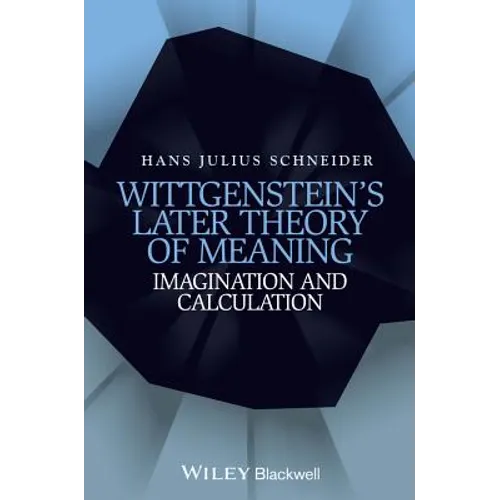
Wittgenstein's Later Theory of Meaning - Hardcover
- Regular price
- $103.61
- Sale price
- $103.61
Couldn't load pickup availability
Details
- SKU: 9781118642306
- Availability: In Stock
Description
by Hans Julius Schneider (Based on a Book by)
By exploring the significance of Wittgenstein's later texts relating to the philosophy of language, Wittgenstein's Later Theory of Meaning offers insights that will transform our understanding of the influential 20th-century philosopher.
- Explores the significance of Wittgenstein's later texts relating to the philosophy of language, and offers new insights that transform our understanding of the influential 20th-century philosopher
- Provides original interpretations of the systematic points about language in Wittgenstein's later writings that reveal his theory of meaning
- Engages in close readings of a variety of Wittgenstein's later texts to explore what the philosopher really had to say about 'kinds of words' and 'parts of speech'
- Frees Wittgenstein from his reputation as an unsystematic thinker with nothing to offer but 'therapy' for individual cases of philosophical confusion
Back Jacket
Wittgenstein's Later Theory of Meaning: Imagination and Calculation presents a comprehensive analysis and exploration of the significance of Wittgenstein's later philosophy of language for a theory of meaning. Proposing that there is a network of systematically connected insights to be found in Wittgenstein's later writings that is of epistemological relevance, renowned philosopher and Wittgenstein scholar Hans Julius Schneider attempts to free Wittgenstein from his reputation as an unsystematic thinker with nothing to offer but "therapy" for individual cases of philosophical confusion.
Schneider argues his points by first summarizing Gottlob Frege's philosophy of language, then engaging in close readings of a variety of Wittgenstein's texts to explore what he really has to say about "kinds of words" and "parts of speech." Subsequent chapters explore and answer questions centered on the concepts of "imagination" and "projection"; discuss Wittgenstein's struggle with his older models of linguistic complexity; and spell out the consequences for the project of a "theory of meaning." Innovative and original, Wittgenstein's Later Theory of Meaning represents an important and invaluable contribution to Wittgenstein scholarship that offers rich new insights into one of the 20th century's most influential philosophers.
Author Biography
Hans Julius Schneider is Professor Emeritus of Philosophy at the University of Potsdam. His publications include Phantasie und Kalkül (1992) and Religion (2008). He also served as a co-editor of the journal Deutsche Zeitschrift für Philosophie for a number of years and has made several contributions to this publication as well as numerous other philosophical essay collections.
Number of Pages: 208
Dimensions: 0.6 x 9.1 x 6 IN
Publication Date: December 16, 2013
Share