
Best Sale


LO4011 - Rhodium Brass Ring with No Stone
- Regular price
- $2.31
- Sale price
- $2.31


TK2942 - High polished (no plating) Stainless Steel Ring with No Stone
- Regular price
- $4.62
- Sale price
- $4.62


Sport Neckband Bluetooth Earphone Magnetic Wireless Headphones
- Regular price
- $16.89
- Sale price
- $16.89


Bluetooth i7s TWS Wireless earbuds for Iphone Huawei Samsung
- Regular price
- $16.38
- Sale price
- $16.38


Frida Baby Thermometer, 3-in-1 Infrared Thermometer for Ear, Forehead & Touchless, Fever Thermometer for Baby, Infants, Toddlers, Kids & Adults
- Regular price
- $76.74
- Sale price
- $76.74



Product sidebar
Categories
Best Sale
LO4011 - Rhodium Brass Ring with No Stone
- Regular price
- $2.31
- Sale price
- $2.31
TK2942 - High polished (no plating) Stainless Steel Ring with No Stone
- Regular price
- $4.62
- Sale price
- $4.62
Sport Neckband Bluetooth Earphone Magnetic Wireless Headphones
- Regular price
- $16.89
- Sale price
- $16.89
Bluetooth i7s TWS Wireless earbuds for Iphone Huawei Samsung
- Regular price
- $16.38
- Sale price
- $16.38
Frida Baby Thermometer, 3-in-1 Infrared Thermometer for Ear, Forehead & Touchless, Fever Thermometer for Baby, Infants, Toddlers, Kids & Adults
- Regular price
- $76.74
- Sale price
- $76.74

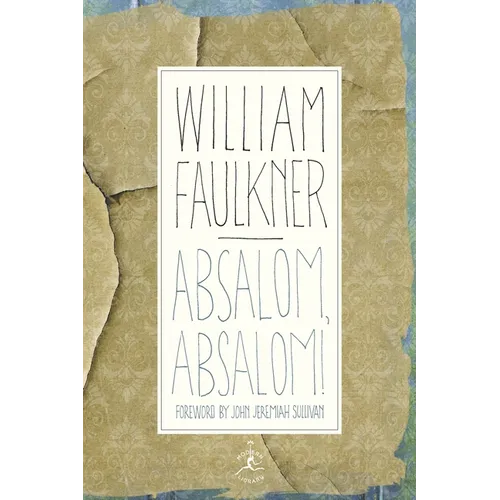
Absalom, Absalom! - Hardcover
Couldn't load pickup availability
Details
- SKU: 9780679600725
- Availability: Out stock
Description
by William Faulkner (Author), John Jeremiah Sullivan (Foreword by)
From the Modern Library's set of beautifully repackaged hardcover classics by William Faulkner--also available are Snopes, As I Lay Dying, The Sound and the Fury, Light in August, and Selected Short Stories
One of The Atlantic's Great American Novels of the Past 100 Years First published in 1936, Absalom, Absalom! is William Faulkner's ninth novel and one of his most admired. It tells the story of Thomas Sutpen and his ruthless, single-minded attempt to forge a dynasty in Jefferson, Mississippi, in 1830. Although his grand design is ultimately destroyed by his own sons, a century later the figure of Sutpen continues to haunt young Quentin Compson, who is obsessed with his family legacy and that of the Old South. "Faulkner's novels have the quality of being lived, absorbed, remembered rather than merely observed," noted Malcolm Cowley. "Absalom, Absalom! is structurally the soundest of all the novels in the Yoknapatawpha series--and it gains power in retrospect." This edition follows the text of Absalom, Absalom! as corrected in 1986 under the direction of Faulkner expert Noel Polk and features a new Foreword by John Jeremiah Sullivan.Front Jacket
The story of Thomas Sutpen, an enigmatic stranger who came to Jefferson in the early 1830s to wrest his mansion out of the muddy bottoms of the north Mississippi wilderness. He was a man, Faulkner said, "who wanted sons and the sons destroyed him."
"From the Trade Paperback edition.
Author Biography
William Faulkner, one of the greatest writers of the twentieth century, was born in New Albany, Mississippi, on September 25, 1897. He published his first book, The Marble Faun, in 1924, but it is as a literary chronicler of life in the Deep South--particularly in the fictional Yoknapatawpha County, the setting for several of his novels--that he is most highly regarded. In such novels as The Sound and the Fury, As I Lay Dying, Light in August, and Absalom, Absalom! he explored the full range of post-Civil War Southern life, focusing both on the personal histories of his characters and on the moral uncertainties of an increasingly dissolute society. In combining the use of symbolism with a stream-of-consciousness technique, he created a new approach to fiction writing. In 1949 he was awarded the Nobel Prize for Literature. William Faulkner died in Byhalia, Mississippi, on July 6, 1962.
Number of Pages: 432
Dimensions: 1.1 x 8 x 5.7 IN
Publication Date: November 09, 1993
Accelerated Reader:
Quiz Name: Absalom, Absalom! the Corrected Text
Interest Level: Upper Grades, 9-12
Reading Level: 9.1
Point Value: 25
Share